June 8th, 2011
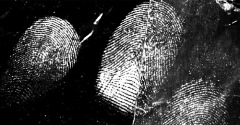
Many thanks to Eric for posting a link to an Nanowerk News article about how nanotechnology is being used to recover fingerprints.
From Nanowerk News: Despite fingerprinting being essentially the foundation technique of modern forensic science, only a fraction of all the fingermarks at a crime scene are actually detected.
Now the work of University of Technology Sydney (UTS) forensic science researcher Dr Xanthe Spindler has made an important step towards recovering usable fingerprints from old evidence and surfaces long considered too difficult by crime scene investigators …
The new method developed by Dr Spindler as part of her PhD work uses antibodies designed to target amino acids and can detect aged, dry and weak fingerprints that can’t be captured using traditional fingerprinting methods.
The complete article is here. The image is from the article, it was provided by Xanthe Spindler, and it shows “Latent fingermarks from a male donor developed on aluminium foil.”
Tags: Crime Science ·
April 22nd, 2011

This year New York joined Colorado and California as states that now use familial DNA to try to solve cold cases.
From Wikipedia:
“Familial DNA database searching (sometimes referred to as “Familial DNA” or “Familial Searching”) is the practice of creating new investigative leads in cases where DNA evidence found at the scene of a crime (forensic profile) strongly resembles that of an existing DNA profile (offender profile) in a state DNA database but there is not an exact match.”
The picture is of Lonnie D. Franklin Jr., 57, who was arrested in California last year and charged with 10 counts of murder and one of attempted murder. The state DNA lab linked Franklin’s son’s DNA (who had been convicted of a felony weapons charge) to evidence from crimes scenes of serial killer known as the Grim Sleeper.
From NY1: “According to the New York Post, starting April 1st, the city medical examiner’s office will begin notifying police and prosecutors if partial DNA collected from 25 cold case crime scenes matches DNA profiles of any convicted felons in the state’s databank.”
The ACLU and others are critical of the practice, saying it is an invasion of privacy. I would like to hear more specifics about what the dangers of this practice might be.
The picture is by AP photographer Nick Ut.
Tags: Uncategorized ·
March 27th, 2011
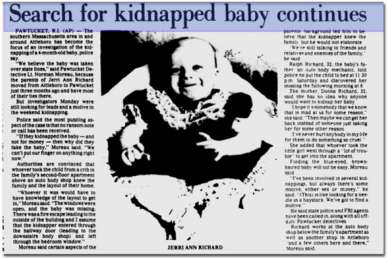
“Two days after Thanksgiving, a grandmother was brutally murdered inside the Pawtucket home where she’d lived for most of her life. The next month, a Providence man was found in a puddle of blood inside his house, where the bars on the windows and spike-topped fence had failed to keep his killer away.
In both cases, detectives combed the crime scenes, searching for clues in blood stains, hairs, skin cells and other substances the killers may have left behind.
But the forensics lab at the Health Department is so backlogged that it takes from six months to more than a year to analyze DNA in most violent-crime cases. Lesser crimes can take longer.”
That is beginning of a very well researched article written by Amanda Milkovits for The Providence Journal. The full article is here.
Tags: Uncategorized ·
January 30th, 2011
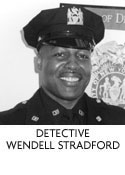
Hello! Is that Detective Wendell Stradford in the back there? I wasn’t aware when I first wrote that NYPD detectives were investigating serial killer Rodney Alcala that I knew one of the investigators. The ABC news story about the case can be viewed here.
Alcala will be extradited to New York to stand trial for the 1971 murder of 23-year-old Cornelia Crilley and the 1977 murder of 23-year-old Ellen Hover. Good work Det. Stradford and Det. Steve Braccini (and many others who were working with you, I’m sure). I believe they’ve been working on this case for seven years.

Tags: Uncategorized ·