February 5th, 2009
“Forensic evidence that has helped convict thousands of defendants for nearly a century is often the product of shoddy scientific practices that should be upgraded and standardized, according to accounts of a draft report by the nation’s pre-eminent scientific research group.
“The report by the National Academy of Sciences is to be released this month.” From an article in the New York Times today. The full article here. What a mess. But I want to see the report before saying anything else, but oh my.
Tags: Crime Science ·
January 19th, 2009

I was just reading a piece in the Boston Globe titled, Hub police show no gain in solving homicides. There’s a lot I could say, but I’m caught up in the inauguration excitement and not very focused.
A few things in the piece jumped out at me. “He beefed up the unit to 25 detectives, replaced the deputy superintendent in charge, added two more detectives to the one-man cold case squad, and instructed investigators to meet regularly with victims’ families so they could build relationships that might result in leads.” They talking about Police Commissioner Edward Davis, pictured here (and I got the picture from the Globe piece, it was taken by Dominic Chavez). Very very very good changes, but their Cold Case squad had only one detective, and now has only three? If they’re having trouble clearing cases that means the cold cases are increasing.
The other thing that jumped out at me was this: “Nationally, clearance rates fell sharply from 92 percent in 1960 to 61 percent in 2006, according to a 2008 report by Southeastern Louisiana University.”
I meant to post about this earlier, with respect to the clearance rates the NYPD shows for 1960 and for the next ten years or so, which are as high as the ones mentioned there. I don’t believe them. I don’t think ten years later (and to this day) they suddenly got bad at solving murders, or any one of a number of factors that are put forward to explain why they went from having only 10% or so unsolved murders yearly during the 60’s to 35% – 45% unsolved murders now. (Just think of all the tools we have now that we didn’t have then.) There are various things contributing to lower clearance rates, but bottomline I don’t believe they were ever that high. I think the main reason the numbers are what they are now compared to 1960 is that they have just gotten a little more honest about them over the years.
Further, I’m skeptical overall about clearance rates in general. For instance, homicides are cleared when they make an arrest. If that arrest does not lead to a conviction they don’t go back and adjust the numbers. What if they had the wrong guy? So we don’t really know how many unsolved murders we’ve got for each year. We only know how many never led to an arrest. If they say they cleared 65% in 1990, for instance, there isn’t a second figure which communicates the outcome of those cases.
Anyway, I read the article because I actually felt compassion for that commissioner and the Boston detectives. I learned everything I could about solving murders and why some don’t get solved, and the main thing I learned: solving murder is hard. When I offered suggestions in my book it’s not like I came up with a lot (more training in things like DNA, blood spatter/splatter, how to use the internet to find information and people, etc.). But I think it also comes down to talented, hard-working people in any area are hard to find. Lots of people play violin for instance, and lots of them practice all the time, nonetheless only a small number are gifted. The same is true with great detectives. It’s not like they’re a dime a dozen.
Tags: Cold Case Investigation Facts · Crime Science · Homicide Facts ·
December 18th, 2008
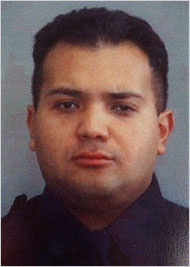
I heard that repeatedly when I was writing my book. Now I’m reading in the Times that there’s going to be an indictment in the murder of police officer Ralph Dols. Dols was shot on the corner of Avenue U and East 19th Street, in Sheepshead Bay, on August 25, 1997 (he died at Coney Island Hospital). It looks like they’re going to charge Joel Cacace, who they always suspected, and others.
From the Times: In addition to Mr. Cacace, the indictment charges Dino Calabro, 42, identified as a captain, and Thomas Gioeli, 56, who was also an acting boss in the family and is known among his peers as Tommy Shots, and Dino Saracino, 36, who prosecutors say is a soldier, the officials said.
I’ll be curious to hear the whole story.
Tags: Uncategorized ·
December 14th, 2008
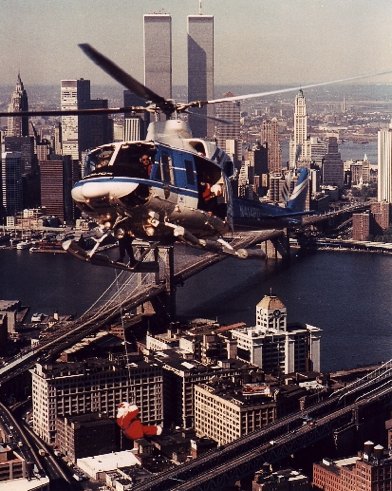
I know I post this every year, but I do love this photograph. (Even with the sad elements.) Don’t you wish you could be this Santa?
Tags: Uncategorized ·