March 4th, 2007
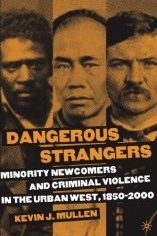 People who have retired from law enforcement are an amazing resource. A lot of that must be due to the fact that they are finally free of all the politics that come with the job. I’ve been looking into a 1934 San Francisco case and I was referred to retired Deputy Chief Kevin J. Mullen. His website.
He couldn’t help me with that particular case, but he immediately came back with the fact that there were 39 homicides in San Francisco that year, then he explained how this particular case might have fallen through the cracks in the coroners records, and finally he gave me the number for the San Francisco Public Library. Since I could have easily looked that number up myself, it was a level of helpfulness that stood out for me. And I loved having that homicide total for the year.
But even better, when I wrote back with the number of homicides in New York in 1934 — 400, and 154 of them are still unsolved — he immediately and rightly pointed out that given the populations of the two cities, the murder rate was actually pretty much the same. He said their solve rate was probably better, which is almost certainly true. Not a dig against New York, the greater the population, the lower the clearance rate, generally. This is true nationwide.
He has written two other books in addition to the one pictured. He said, “My interest in this aspect of the justice system is mostly sociological,” which is also true for me, so all his books are of interest, but the one pictured is the most intriguing for me. (Although his book, The Toughest Gang In Town: Police Stories from Old San Francisco, looks great too.)
One of the blurbs: “Ex-cop Kevin J. Mullen investigates 150 years of lethal mayhem in San Francisco, and what he uncovers in the history of the city’s successive newcomers–Australian, Latino, Irish, Asian, Italian, African American–will no doubt prove as controversial as it is illuminating. Rigorously grounded and thoughtfully nuanced, Dangerous Strangers elevates the issue of urban homicide rates among America’s immigrant subcultures to a new level of discourse.” –Robert R. Dykstra, Emeritus Professor of History and Public Policy, SUNY Albany.
Someone wrote an article about volunteer cold case squads around the country made up of retired homicide detectives, but I can’t find it. It’s a good trend, although unless the retired detective doesn’t need the money they really should get paid. I have a few cold case organizations made up of retired guys in my list of cold case squads.
Tags: New Websites, Books and other Resources · Old Murder Cases · Police History ·
February 22nd, 2007
The suspect in a 17-year-old murder was just arrested in Montenegro. There’s a New York Post article about it [link no longer active] here. It was an incredible investigation. Detective Sgt. Dennis Singleton just kept on it, took it as far as he could, (which involved tracking the guy as he went to other countries and possibly dismembered women wherever he lived) and when Singleton couldn’t go any farther, he refused to let it just go dormant. Instead, he handed it off to Detective James Osorio in the Cold Case Squad’s Bronx unit.
Good work, Detective James Osorio and Detective Sgt. Dennis Singleton.
The investigation looks like a textbook example of what can be accomplished with a little cooperation. It involved different units within the NYPD, law enforcement around the world, the FBI and Interpol and probably many others.
Good work everyone.
(The picture of the arrest is from Gothamist.)
Tags: Uncategorized ·
February 19th, 2007
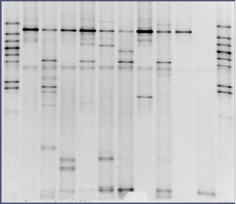 Because of recent legislation allowing for the expansion of DNA collecting, I thought I would compare how much bigger New York’s DNA database has grown since I wrote my book.
As of August 2004, there were 139,344 DNA profiles in the New York State collection, and the number of hits they got from them was 1,529. As of February 2007 they have 179,965 profiles, with 3,772 hits. Most of those hits are for sex crimes, by the way. When I wrote my book 7% of the hits were murder cases and 72% were for sex crimes.
Looking at those current totals now, I’d have to go back to my notes to see if the total I used in my book was the total number of profiles or the total number of samples they had in their possession, which would include both samples not yet analyzed and profiles. Because the grand total now would be 229,203 and that figure seems to make more sense in terms of tracking growth. Otherwise the database has grown about 40,000 samples in two years. Which actually makes sense. Analyzing 20,000 DNA profiles a years sounds like a lot. So maybe the figure I used was the total number of profiles and not the grand total of samples. (I’m sure everyone’s eyes are blurring over by now.)
At the national level, there were 1,945,163 profiles when I wrote my book, and as of Decenber 2006, there were 4,138,015.
There’s a ton of statistics about DNA collection online. I started to look around and frankly, got overwhelmed. But if you wanted to do a study of just how many DNA profiles were out there, and how many crimes and what kind were being solved, you could do a good job of it.
You could start with CODIS (Combined DNA Index System). But from there, it seems almost every law enforcement agency, attorney general, ie, here’s California’s, and on and on, has facts about what they are collecting (it’s great!).
Tags: Homicide Facts ·
January 29th, 2007
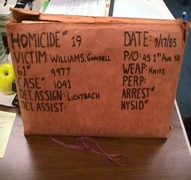 The NYPD’s Cold Case Squad finally has a commanding officer, Capt. Sean Crawley (I’m not sure if I’m spelling his name correctly). I don’t know a lot about him, except that he worked in the Manhattan DA’s office, and is an accountant. But it’s great that the squad has a commanding officer at long last, they’ve been without one for so long.
Good luck, Capt. Crawley. I look forward to seeing what you do with the squad!
Tags: Uncategorized ·