May 13th, 2007
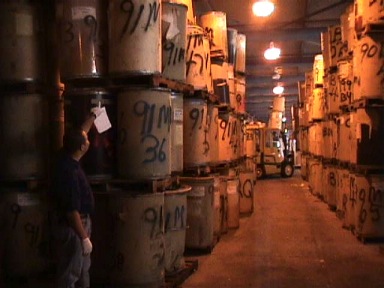
The NYPD just put out an RFP (request for proposal) to computerize and overhaul their current evidence storage system. Before embarking on this huge, expensive, time-consuming project–it will probably takes years to complete–the responsiblity for storing evidence should be handed over to an independent group. I posted about this recently in response to a New York Post editorial.
Evidence should not be stored by an organization that has a vested interest in the outcome of the trial. As I said before, I’m embarrassed that this never occurred to me before, but if I wanted to put you in jail, for instance, would you be comfortable with me holding onto all the physical evidence that will decide your fate?
The NYPD shouldn’t start. They shouldn’t spend the money. This is not an accusation by the way, this is just common sense. I have to think of a likely organization to take something like this over. The Office of the Chief Medical Examiner is run under the Department of Health. Would it make sense for them to take it? Who else?
Here’s a Staten Island Advance article about the news.
(The picture was taken at one of the NYPD’s property clerk warehouses. Those barrels contain evidence from homicides.)
Tags: Uncategorized ·
May 7th, 2007
 I came across this guide [the link to the guide has since been removed] for investigating cold cases. I haven’t seen it, but it’s a presentation given by Andy Rosenzweig, a former NYPD guy who is now the Director The Cold Case Forum, LLC. Maybe someone who has seen it can let me know how it is.
In other news, there’s a good article in the New York Times outlining some bills under consideration in New York.
More and more attention has been focused on evidence storage, by the way, which is a good thing. I’ve been meaning to write about what I’ve learned writing my book, and what I’ve discovered since. I’m on a deadline right now so it probably won’t happen until the summer, but legislation like the bills outlined in Michael Cooper’s article are a good thing I think.
Tags: New Websites, Books and other Resources · Uncategorized ·
April 16th, 2007
I’m embarrassed that I didn’t think of this myself, but this is great idea and absolutely the way to go. From an [link no longer active] OpEd today in the New York Post by Roger Koppl.
“The time has come to free forensic science from the pressures of prosecutorial bias. To that end, crime labs should become independent of police and prosecutors, and public defenders should be given greater access to forensic advice and testing.”
What Koppl suggests is also the way to go with evidence storage. It would perfectly address the problems there.
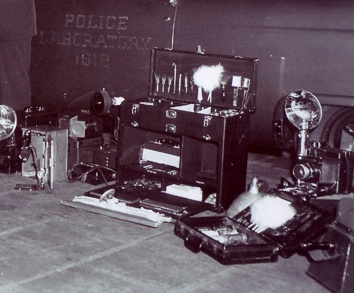
(This is a detail from an old photograph of some NYPD police lab guys and their equipment.)
Tags: Uncategorized ·
March 19th, 2007
 I recently got email from Detective Mark Pfeiffer of the Fairfax County Police Department’s Cold Case Unit. He was giving me some corrections to my list of cold case units. I became aware that Fairfax has a unsolved sex crime unit.
I am so glad to hear that unsolved sex crimes units are being created. Tom Jackman of the Washington Post wrote an article about the Fairfax squad on February 13. From his article. “Most police departments don’t have the resources or manpower to form a squad devoted solely to sex crimes. Phoenix started the first one in 2000; Baltimore, Charlotte and Dallas also have one or two full-time cold-case sex specialists.”
The other issue is the statute of limitations for sex crimes. It’s different from state to state, but in New York the statute of limitations is so short it’s immoral. Someone can rape a child and if they manage to allude capture for a few years, they’re free. Not that someone should be able to get away with raping anyone, but the argument for a statute of limitations is that it’s hard to prove consent years after the fact. It’s equally difficult to prove a lack of consent years after the fact, so that’s a wash, but for a child it doesn’t even apply. Sex with a nine-year-old child, for instance, is never consensual. Virginia doesn’t have a statute of limitations for rape.
Solving sex crimes could ultimately help solve unsolved murders as well. When detectives in New York look through unsolved murders for ones they think they can solve, they look for female victims first, because with a sex crime–often a component of a woman’s murder–there is likely to be more evidence. The murderer got closer to his victim, a savage intimacy that provides more serological evidence, fingernail scrapings, hair and fibers. Find the rapist, find the murderer.
Some states from the U.S. Department of Justice website:
– Convicted rape and sexual assault offenders serving time in State prisons report that two-thirds of their victims were under the age of 18, and 58% of those–or nearly 4 in 10 imprisoned violent sex offenders–said their victims were aged 12 or younger.
– In 90% of the rapes of children less than 12 years old, the child knew the offender, according to police-recorded incident data.
– Among victims 18 to 29 years old, two-thirds had a prior relationship with the rapist.
– Four datasets (the FBI’s UCR arrests, State felony court convictions, prison admissions, and the National Crime Victimization Survey) all point to a sex offender who is older than other violent offenders, generally in his early 30’s, and more likely to be white than other violent offenders.
Great work Det. Pfeiffer, and everyone else in your squad. If anyone else knows of other unsolved sex crime units, please let me know. I’d love to add them to my list.
Tags: Cold Case Squads ·